The dimension that actually limits what you can buy
When an owner sizes a building for a new or replacement rig, the number that decides what can be delivered is the clear opening height, measured at the door track and header line rather than taken from the door spec. That measurement is the apparatus bay door dimension that most often caps the vehicle a buyer can actually order.
Width gets the attention because it is visible, easy to measure, and easy to argue about. Height is harder to read, since the clearance is a stack: header depth, track projection, the bottom seal, and the open panel above the opening. Each layer takes inches out of the opening you thought you had.
Dealers quote nominal sizes; buildings deliver actual ones. Measure the opening before you compare chassis specifications, then use a bay depth and clearance planning guide to confirm that it is the height, not the width, that matches the rig on your shortlist.
Structural Opening vs. Clear Opening: Where Your Bay Loses Dimension
The number on the drawing is rarely the number your truck drives through. The structural opening is the rough hole cut into the wall; the clear opening is what is left once the door, frame, hardware, and trim are installed. Fleets that confuse the two end up with apparatus that fits on paper and jams at the threshold.
Every dimension you review gets reduced by parts that do real work:
- Header and lintel depth, hanging down into the top of the opening
- Track projection below or behind the header on sectional doors
- The open-panel stack on overhead doors, which takes headroom once the door is raised
- Bottom seal and threshold thickness at the slab
- Weather stripping and frame rebates around the perimeter
- Bumper or bollard intrusion into the side clearance
These losses stack vertically. A few inches from each source add up, which is why clear opening height, not width, is usually the binding constraint on the vehicle you can buy. Learn more about bay depth sizing before you sign anything.

The four dimensions that actually bind, in order
-
Clear opening height at the door track. Measure floor to the lowest point of a fully open track or lintel, not the nominal door size. This number caps cab roof, light bar, and antenna height, and a couple of inches is often what separates one chassis from another.
-
Clear opening width between frame rebates and side obstructions. Measure the jamb inner faces, then subtract projecting hinges, guards, standpipes, and bollards. Add mirror spread to body width and this becomes the closest call after height, not a comfortable margin.
-
Setback and approach in front of the door. Measure apron depth and turning room off the roadway. The truck has to be square and straight before it enters, so a short apron limits wheelbase and front overhang no matter how tall the door is.
-
Internal bay depth and turning swing. Measure usable depth from door to rear wall and to the first obstruction. Rear overhang, ladder racks, and pivot swing all draw from that figure, as this bay depth sizing guide explains.
Whichever of the four is smallest governs the purchase. Size the bay against the tightest number, not the average.
Door type decides how much of that clearance survives. For how depth and door choice interact, see this guide to industrial fire station bay depth sizing.
| Door Type | Nominal Opening Supported | Headroom Taken by Header, Track, or Coil | Side Clearance Lost to Frame or Stacking | Service and Maintenance Implication | Vehicle Classes Comfortably Admitted |
|---|---|---|---|---|---|
| Sectional overhead | Up to ~16 ft wide x 14 ft high; larger by custom build | 12-18 in below the header for header plus horizontal track | 4-6 in per side jamb; track return intrudes at ceiling | Springs, cables, rollers, and hinges wear; balanced door needs annual torsion check | Pumpers, rescues, small tankers, single-rear-axle aerials |
| Roll-up (coiling) | Up to ~14 ft wide x 16 ft high; high-lift versions taller | 18-30 in above the opening for the coil barrel; little or none inside the opening itself | 3-5 in per side guide; no stacking depth | Slat, barrel, and hood service; less frequent but heavier component replacement | Pumpers, tankers, straight-frame aerials, ARFF tenders in high-lift trim |
| Folding / concertina | Very wide spans, often 20-40 ft; low headroom friendly | 6-12 in below the header for minimal overhead track | 6-10 in per side; panels stack into the jamb zone | Many hinges, pivots, and seals; frequent lubrication and seal replacement | Wide-body ARFF crash tenders, heavy rescues, multi-axle aerials |
| Sliding | Very wide spans, 20 ft and up; height limited only by structure | Near zero at the opening; track rides on the wall face | 4-8 ft of wall for stacked leaves; track standoff of 6-10 in | Trolleys, track alignment, and drive motors; exterior exposure to weather | ARFF crash tenders, tillered aerials, oversize industrial rigs |
All dimensions above are illustrative ranges only; actual header, track, jamb, and stacking dimensions vary by manufacturer, operator type, and structural design and must be verified against the door supplier’s shop drawings before the bay is built.
Door Upgrade or Smaller Vehicle: Comparing Cost and Downtime
Sometimes both paths are viable, so treat this as a cost-and-downtime comparison rather than a verdict. Replacing a door or re-headering means cutting back the wall above the opening, installing a longer structural lintel carried on new jamb posts, and reworking the weather seal, track, and operator. Plan on several weeks with the bay out of service, plus engineering and permit time. What the work does not fix matters just as much: bay depth, apron turning radius, and floor loading stay exactly as they were, so confirm your real limits through fire station bay depth sizing first.
Run the comparison in this order: measure the tightest constraint, price the door scope, price the vehicle change, then weigh total downtime against the apparatus you lose.
Documents to request before either decision:
- Door manufacturer’s shop drawings showing clear opening dimensions
- Structural lintel details signed off by an engineer
- Vehicle manufacturer’s loaded height and width figures, including mirrors and light bars
Also check how washdown water will behave after any change, since apparatus bay drainage planning often forces a rethink of floor slope.
FAQ: Apparatus Bay Door Dimensions
Does door width or door height limit the vehicle I can buy?
Height, nearly always. A 144 in wide door passes a 100 in body with room for mirrors. A 12 ft framed opening loses 12 to 18 in to header and track, so a 12 ft apparatus will not fit.
What apparatus bay door height suits a full-size rescue or pumper?
Plan for 13 ft 6 in clear. Body tops reach 11 ft 6 in, light bars add 8 in, and a loaded chassis sits higher than the spec sheet says. Short openings also leave no headroom for apparatus bay exhaust extraction to grab soot at the source.
Does a roll-up door gain usable height over a sectional door?
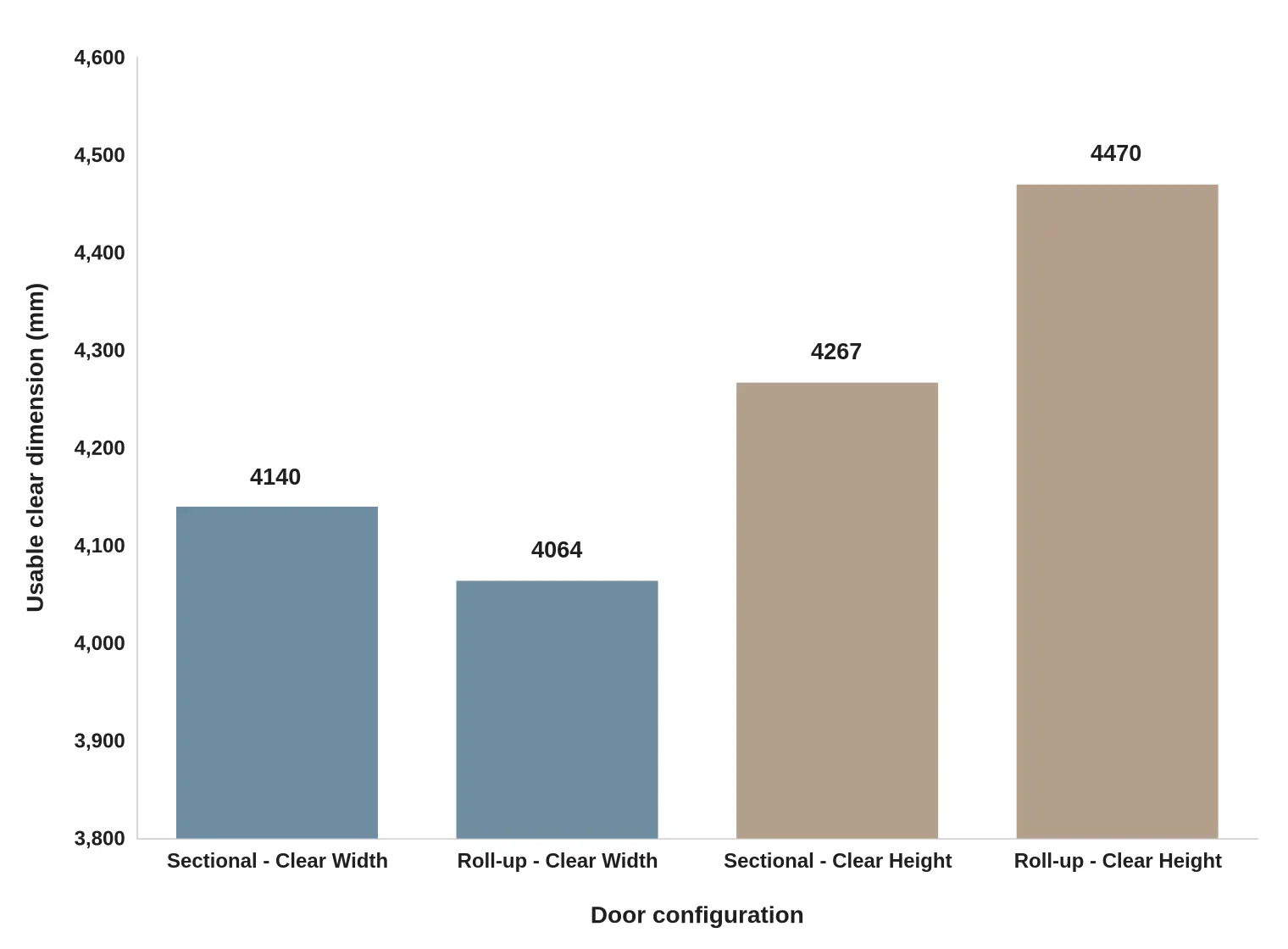
Yes, about 12 to 18 in. Sectional panels hang under the header; a roll-up coil winds above it, so the framed apparatus bay door dimension becomes the driveable one.
How much side clearance should I add for mirrors and light bars?
Add 12 in per side. Mirrors project 10 to 12 in past a 96 in body and corner beacons add more, so a 102 in body needs about 10 ft 6 in of clear width, and more where the apron is tight.
Can a door be raised without rebuilding the bay wall?
Usually yes. Where the header sits above the new opening and the wall is non-load-bearing infill, you cut and add a lintel. Where the header is structural, you rebuild.
The One Dimension That Decides the Purchase
Clear opening height, measured with the door fully open, governs what vehicle you can actually buy. Measure it first, then check clear opening width and usable bay depth against that figure, and hold every remaining number to the same baseline before anyone signs a vehicle specification.
Have these three numbers written down before you start negotiating:
- Clear opening height, door fully open
- Clear opening width
- Available internal bay depth
For depth planning, this bay depth sizing guide walks through the calculation.
CIMC Fire Rescue is an international firefighting enterprise delivering intelligent equipment and integrated vehicles, equipment, services and station-building solutions.