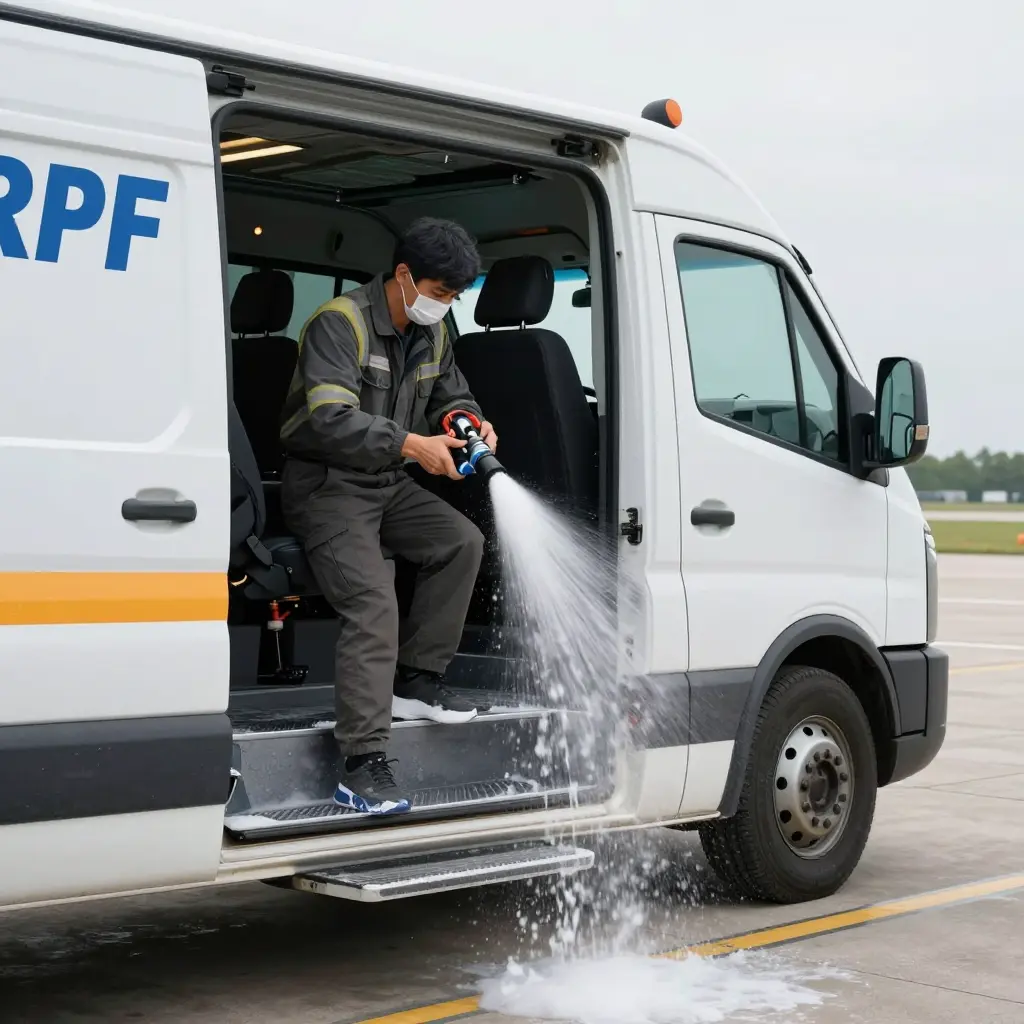
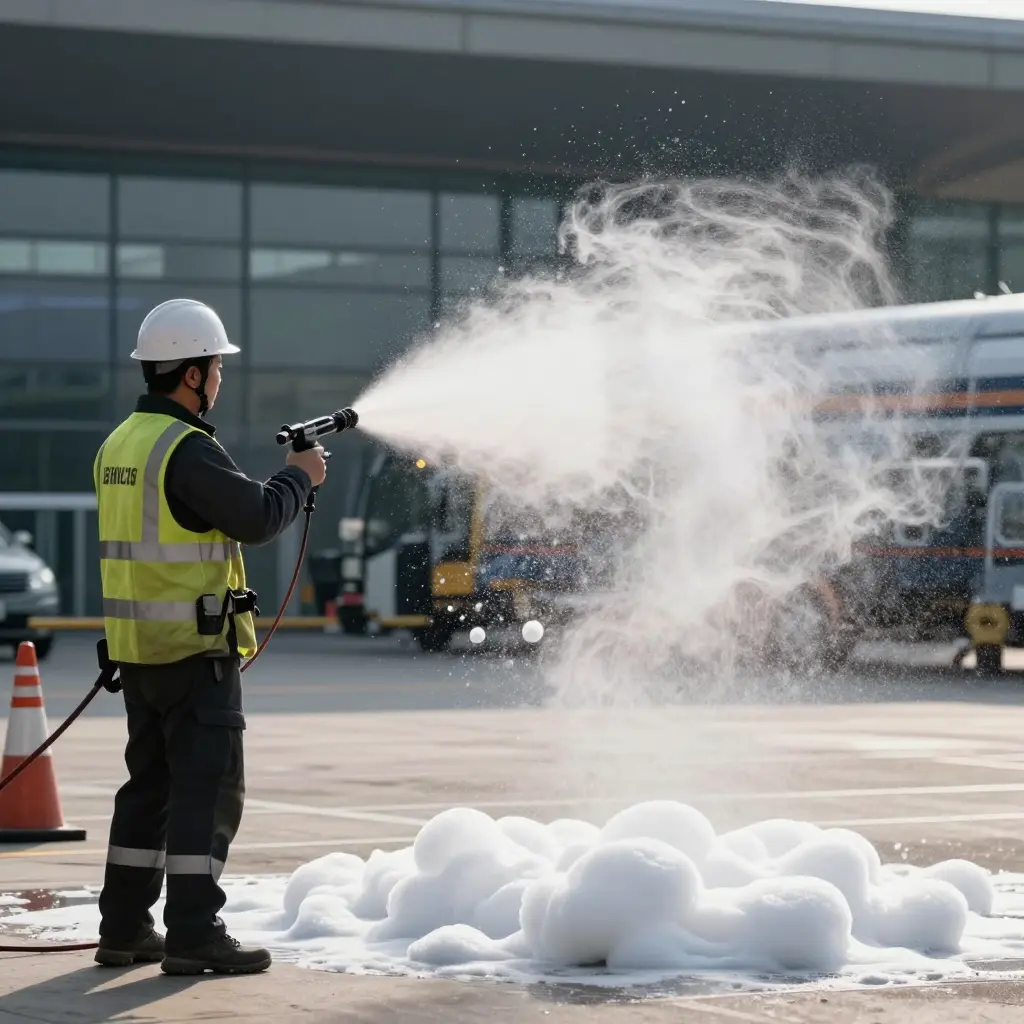
Start With the Right Question
Nobody buys a firefighting robot to replace a trained crew. In a chemical plant the machine earns its cost by taking over the hot, close, contaminated work that puts people at risk, while the crew keeps the judgement, the command structure and every job that still wants a hand on a tool. What follows separates what a robot does on a plant fireground today from what it does not, and gives the engineering reason behind each line.
Two Categories, Defined Up Front
Split the question in two, and keep the halves apart when you brief a board or an insurance carrier.
- Tasks the robot already performs reliably during an incident. Repeatable, geometry-driven work where the platform’s sensors, thermal tolerance and remote control hold up on a real fireground – and where a machine failure costs you equipment, not a life.
- Tasks it still cannot take over. Work that depends on judgement, improvisation, fine manipulation, casualty handling, or on reading a situation that changes faster than a radio link can report it.
Most real tasks sit somewhere between the two, which is why the table further down uses three states rather than two. If you are mapping your own site against that split, which fireground tasks actually justify a firefighting robot is the place to start.
The Criteria That Decide Fit
Four numbers decide whether a machine fits, and all four can be pulled from your own site records instead of a demonstration video. Task frequency says whether the robot will be exercised often enough to stay trustworthy. Exposure reduction counts the personnel-hours it removes from a hot or toxic zone each year. Agent delivery capacity asks whether it can hold the flow and duration the hazard demands, not just hit the peak number on the datasheet. Required human oversight sets how many trained operators you have to keep available, and how much of their attention the machine consumes while it works.
Score your own plant against those four and the purchase stops being an argument about technology. It becomes a calculation you can defend to finance.
Firefighting robot capability by chemical plant task
Each row below answers three questions: what a robot does on a chemical plant fireground today, what limits it, and what a person still has to own.
| Task | Current status | Technical basis or limiting factor | Human role still required |
|---|---|---|---|
| Remote reconnaissance and thermal imaging inside the hot zone | Partial | Heat shielding and standoff distance limit field of view; sensor degradation in smoke and radiant heat | Interprets imagery and decides entry route |
| Fixed monitor and water cannon application | Handled | Fixed mounting with heat shielding; aim held from a safe standoff distance | Confirms target and sets flow rate |
| Foam blanket application on tank and bund fires | Partial | Agent supply dependence – onboard concentrate is spent in minutes, not hours | Runs resupply and judges blanket integrity |
| Cooling of adjacent vessels and pipework | Handled | Water-only demand, stable monitor placement, no foam logistics | Sets cooling priorities and exposure limits |
| Gas and vapour detection | Partial | Sensor degradation and poisoning; readings drift in heat and humidity | Verifies readings and authorises re-entry |
| Valve or actuator manipulation | Partial | Manipulator payload and dexterity limit torque on stiff, corroded stems | Decides valve line-up and confirms closure |
| Casualty search and extraction | Not handled | No lifting or drag capacity; lack of autonomous decision logic for casualty handling | All search and extraction stays with crews |
| Debris or obstacle clearance | Not handled | Manipulator payload and traction limits; no autonomous decision logic for route finding | Operators clear routes and stage equipment |
| Overhaul and hot-spot monitoring | Partial | Thermal sensor degradation near hot surfaces; long dwell times drain power | Crews confirm final extinguishment |
The status column follows one pattern. The machine wins where the job is water, spray and a fixed aim point. It loses where the job needs foam logistics, applied force, or a judgement call.
Tasks a firefighting robot already handles in a chemical plant
A remote-controlled firefighting robot in a chemical plant is not valued for its dexterity. It is valued for two other things: it keeps people out of the hot zone, and it puts a steady, aimed stream of water or foam on a hazard for longer than a crew in full PPE can hold position. Neither depends on the manipulator.
The hardware envelope is already credible
Most industrial units are a shielded chassis around an insulated electronics bay, rated for radiant heat in the 1,000 °C class for short exposures and usually backed by water-spray cooling. Control is line of sight, several hundred metres back. The fire monitor on the chassis delivers roughly 2,000 to 5,000 L/min, and the sensor payload is a visible camera plus a thermal imager on a pan-tilt head.
| Capability | Typical working figure | What it buys the operator |
|---|---|---|
| Thermal shielding | Radiant-heat tolerance in the 1,000 °C class, spray-cooled | Time to hold a line, not to park in flame |
| Remote operating range | Several hundred metres, line of sight | Crew stays clear of the hot zone |
| Fire monitor output | Roughly 2,000 – 5,000 L/min | Sustained cooling without a handline crew |
| Payload | Visible camera plus thermal imager | Aiming confidence and scene awareness |
Those figures are typical rather than guaranteed, and the wording behind them varies by supplier. “1,000 °C class” means very little until you ask for the exposure duration and the test standard it was measured against, so ask.
Why these tasks are mature, not experimental
Two conditions make a task ready for a robot. The first is that it requires positioning and aiming rather than manipulation. Driving to a standoff point, elevating a monitor and trimming the stream are motion-control problems solved decades ago. Opening a stiff valve by hand, making up a coupling, or routing a charged hose through a congested pump house are not, and those stay with crews. The second is that the task tolerates a person in the control loop. An operator watching a thermal feed and correcting the aim is an acceptable workflow when the alternative is nobody entering the area at all.
That is why cooling and standoff monitoring are the mature uses, while foam blanket work is only partly there: the constraint is concentrate supply and proportioning, not the machine’s ability to spray. Where contact is required, the task stays on the drawing board.

Figure: The robot’s operating envelope, in principle.
The inner zone is where the machine performs repeatably on every call. The middle zone is conditional: it works, but only inside limits on heat, access and visibility. The outer boundary is where today’s platforms stop being dependable, and it does not move quickly – nothing on a datasheet should be read as a promise to cross it.
What is only partly handled, and why
The question buyers actually ask is whether the machine does the whole job or half of it. The answer is neither: it is dependable at the outer edge of an incident and partial closer in. The four limits below are engineering, not sales caveats, and each one still leaves useful work on the table.
Manipulation and dexterity
A robot can turn a large quarter-turn valve on a clean, accessible stem, and hold a monitor on a fixed target for an hour without fatigue. What it cannot do is feel. Aligning a flange under load, starting a coupling thread without cross-threading it, torquing bolts in sequence, or telling a seized handwheel from a merely stiff one are all still crew work. The gripper has neither the force feedback nor the fine positioning that a gloved hand brings to a wet, cluttered pump house.
Sensor and perception limits
Thermal imaging, gas detection and video give the robot a usable picture of where the heat and the product are. Steam, dense smoke and radiant heat scatter and saturate those signals, and the machine cannot interpret what survives. Deciding whether a plume is steam or vapour off a boiling tank, judging how close a structure can be approached, or finding a casualty behind a vessel remain human calls.
Autonomy limits
The system executes commands; it does not make tactical judgements. Positioning, retreat triggers and foam strategy – proportioning rate, application angle, how long a blanket is held – are set by the incident commander. That division is the right one: a machine with high repeatability and no situational intent is safest when the decision it carries out was made by someone who can read the fire.
Endurance limits
Water tank volume, foam concentrate capacity and battery runtime set a working window that is usually shorter than the incident. The arithmetic is blunt. A monitor flowing 2,000 to 5,000 L/min at 3% proportioning burns 60 to 150 litres of concentrate a minute, so an onboard tank is gone in minutes, not hours. The robot can hold flow from its own reserves and stay in the hot zone while crews remain outside, but resupply, concentrate refilling and power management are people’s work. Plan refill logistics before the appliance is committed, not after.
Why partial still pays
None of these limits removes the value. Partial capability counts because it cuts human exposure time. Every minute a crew does not spend holding a monitor in radiant heat, or walking a hose line into a smoke-filled pump bay, is a minute of dose and fatigue avoided. Judge that against your own call volumes rather than against full autonomy.
Where a Firefighting Robot Earns Its Place – and Where It Doesn’t
The chart below scores five common task categories from 1 to 5, weighing technical maturity against exposure reduction and the human oversight still required. The weighting matters more than the ranking: a partial task that keeps people out of the hot zone can outrank a handled task that does not.
Reconnaissance and monitoring comes out on top, because it removes people from the hot zone almost entirely. Foam and water application sits mid-table – the hardware works, but agent placement and proportioning still need an operator watching the stream. Casualty search and extraction is last by a clear margin, and the bar is called out in the accent colour: it is the one task where dexterity, judgement and accountability all resist automation at once.
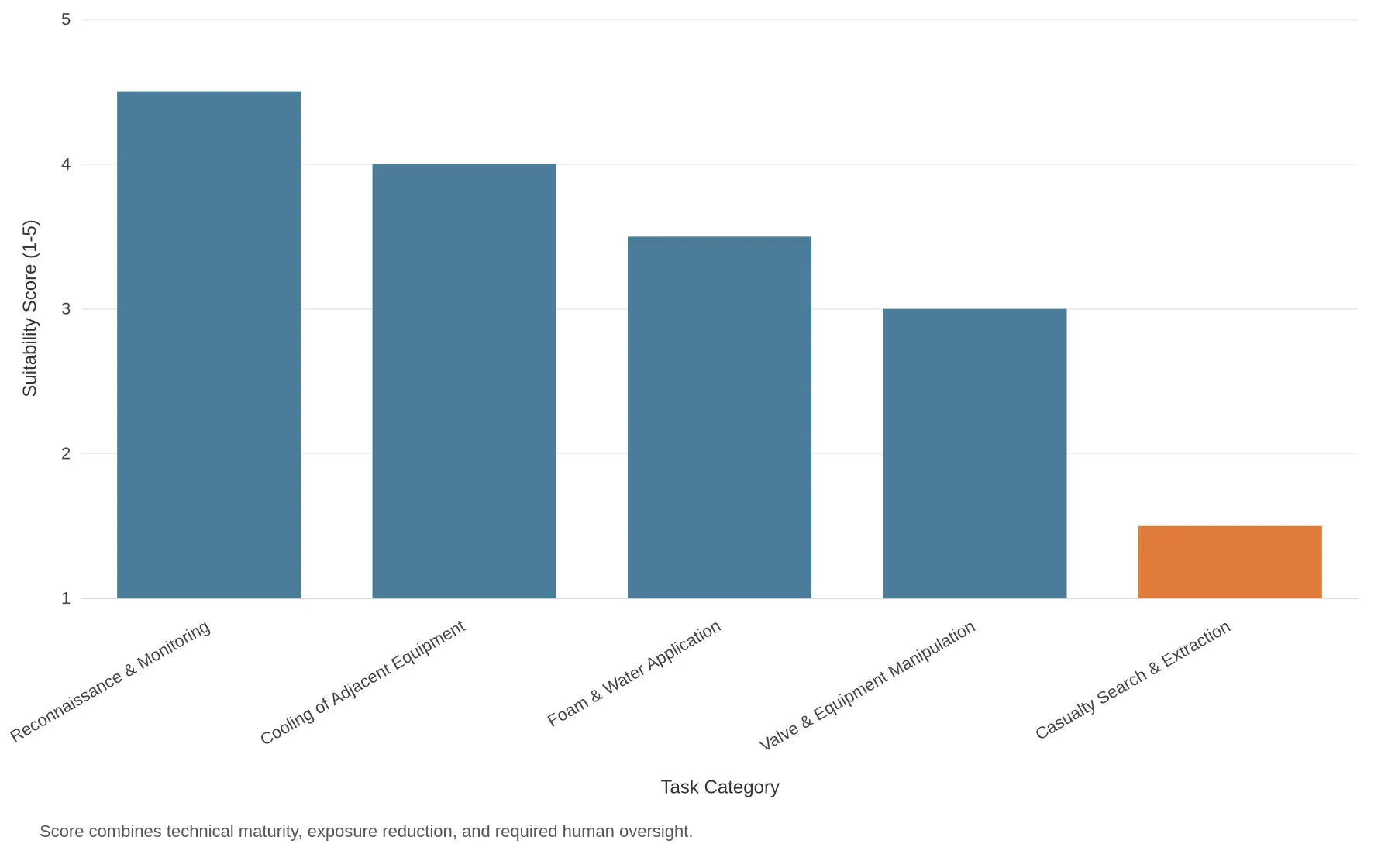
Reading the scores: each value combines technical maturity, exposure reduction and the level of human oversight still required – it is not a measure of performance in isolation.
If you want to weigh those scores against your own response plan, this breakdown of which fireground tasks justify a robot is a practical next read.
Tasks the robot still cannot take over
Use this list as a due-diligence checklist when you scope a purchase. Each item stays a human responsibility on a live chemical-plant incident, and a vendor claim that crosses one deserves a written answer before signature.
- Casualty search, extraction and handling – locating, assessing and physically lifting an injured person in debris, heat or zero visibility is beyond current sensing and manipulation capability.
- Closing or opening stiff or corroded process valves – a clean stem is one thing; a seized valve demands applied torque and feel at the same time, and the robot either stalls short of breakaway torque or shears the stem.
- Reading and interpreting process conditions to make tactical decisions – converting gauge readings, smoke behaviour and sound into an offensive or defensive plan is command judgement, not a sensor output.
- Setting foam proportioning when concentrate type or induction conditions change – viscosity shifts and induction losses need a manual re-set, and the resulting drift is invisible on the panel.
- Working in confirmed flammable atmospheres without appropriate certification and isolation – an uncertified, unisolated entry sits outside the machine’s rated envelope, however capable its chassis.
- Recovering from a lost communications or control link – ask what your candidate unit does when the link drops. Most stop where they are, and recovering a stopped machine from inside a hazard area is a job for people.
- Making the decision to commit or withdraw crews – accountability for putting people in and pulling them out rests with the incident commander and is not delegated to software.
What to plan before you buy

A firefighting robot is rarely let down by the robot. It is let down by the building, the water supply and the people around it. Before you sign a purchase order for a chemical plant deployment, walk the site with a tape measure and an honest checklist.
Bay depth and clear access
Measure the bay for the robot and its carrier as one unit, then add turning and walk-around clearance. Check door height, apron slope, and whether the robot can leave the bay without a three-point shuffle. Depth is the item that most often sinks a retrofit.
Drainage for foam and washdown
Foam-laden runoff is heavier than water, foams up in trenches, and can overwhelm a drain sized for rainwater alone. Confirm trench capacity, falls and where the runoff actually goes before you discharge agent indoors. This planning guide on foam runoff and washdown water drainage is a reasonable starting point.
Exhaust extraction
A diesel carrier idles, comes back hot, and leaves soot on surfaces, sensor lenses and the robot itself. Plan source capture at the stack rather than at the ceiling; here is why diesel soot settles where it does.
Supply, training and comms
Size water and foam concentrate to the monitor’s rated flow for the duration you actually need, not to the tank you already own. Then budget for operator training and radio coverage: a robot that loses signal inside a steel structure is a very expensive tripod.
| Planning item | Question to answer | Why it matters |
|---|---|---|
| Bay depth and access | Does robot plus carrier fit, turn and exit cleanly? | Blocks delivery day if wrong |
| Drainage | Can the trench handle foam and washdown volume? | Runoff control and compliance |
| Exhaust extraction | Is capture at the stack, not the ceiling? | Soot fouling and air quality |
| Water and foam supply | Is agent sized to monitor flow rate? | Determines real attack duration |
| Training and comms | Trained operators, verified coverage? | Usability on the fireground |
Before you commit floor space, work through the bay depth sizing guide.
Recommendation: assign the robot to the confirmed-capability tasks first, size infrastructure to those tasks, and keep human crews accountable for judgement, rescue and manipulation.
The Handoff Principle in One Picture
Behind the brochures the operating logic is short: the robot goes in first, holds the space, and hands the job to people only where their presence adds something the machine cannot. The diagram sets out three moves – detection and remote approach, robot-applied cooling and agent delivery, then human entry for rescue or equipment manipulation – with a return arrow to the robot, which stays on the job throughout.
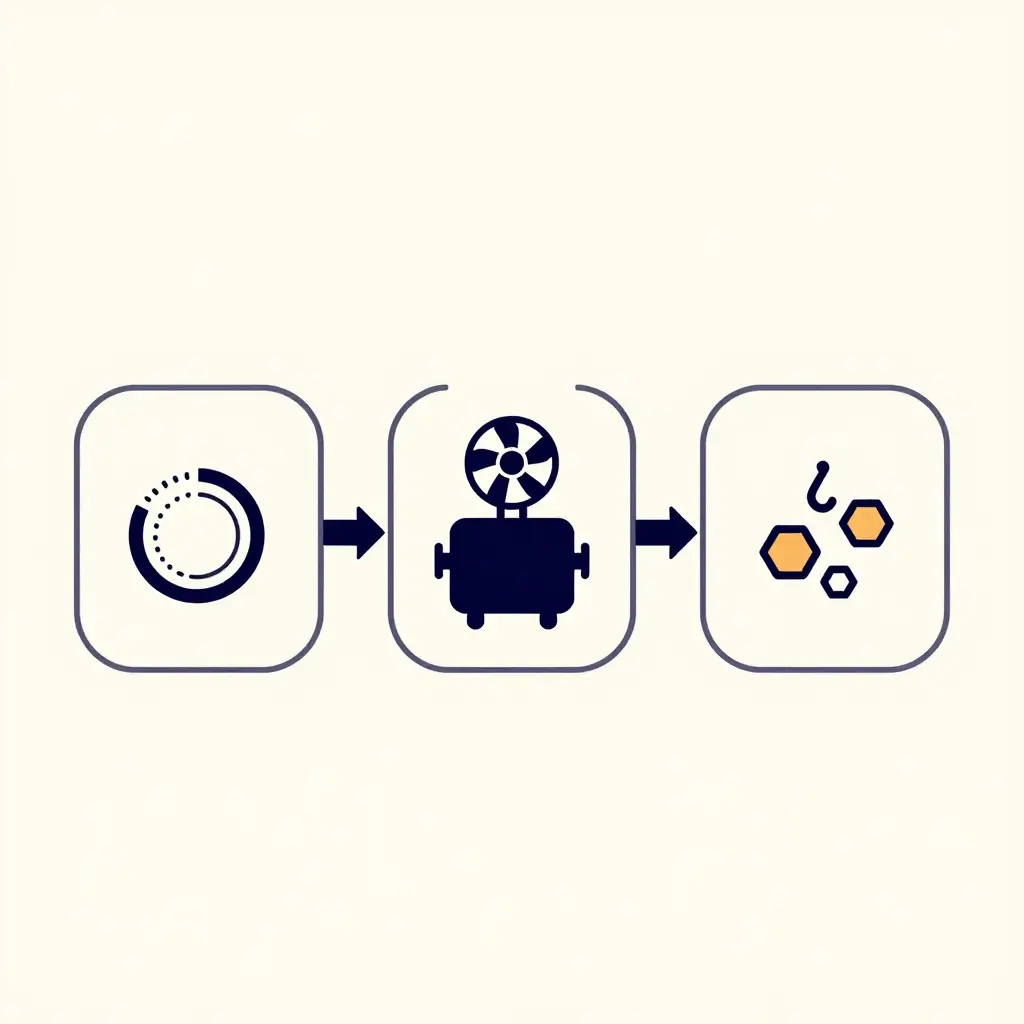
Treat the sequence as a rule of thumb, not a script. The middle stage does the most useful work, buying the time and temperature margin that makes the final stage survivable.
FAQ for Business Buyers
Can a firefighting robot replace a plant fire crew?
No. A firefighting robot takes people out of specific high-risk positions; it does not replace a crew. In a chemical plant it handles sustained cooling of hot equipment, remote observation inside heat or smoke, and water or foam application from a fixed stand-off distance. Hose advancement, boundary cooling around congested pipework and post-incident overhaul are only partly handled. It does not handle rescue, casualty extraction, hazmat sampling decisions or incident command. Those stay with trained people, so treat the robot as an additional tool rather than a substitute.
Which tasks give the fastest return on a firefighting robot in a chemical plant?
The fastest return comes from tasks in the handled column, not the partial one. The strongest candidates are sustained cooling of vessels and piping during an escalation, remote monitoring of a hot zone so that crews stay outside the radiation envelope, and first water or foam onto a bunded area or a spill fire. Each runs for a long time and repeats during drills, which spreads the investment across frequent use. Partial-column work such as hose advancement into congested pipework still needs people and should not be booked as a saving.
What certifications and approvals should a buyer verify before purchase?
Start with the hazardous area classification of the areas where the unit will operate, then check that the certification matches – ATEX or IECEx where applicable, covering the gas group and temperature class of your zone rather than simply carrying the mark. Ask for the ingress protection rating under IEC 60529, the radio and telemetry approvals for your jurisdiction, and any lifting or pressure-vessel certification on onboard cylinders. Request third-party test reports rather than sales sheets, and confirm in writing that your local fire authority and insurer accept remote-operated equipment as part of the site response plan.
How much operator training is required to run the robot safely?
Training is a recurring cycle, not a single course. Expect an initial manufacturer-led programme covering teleoperation, thermal camera interpretation, positioning and nozzle aim, plus maintenance and battery handling, followed by scheduled refresher drills. Duration depends on how many of the handled tasks you assign to the robot, since partial-capability work such as hose advancement needs extra crew coordination practice. Put training time in the same budget as the equipment, and record competence so the machine is only deployed by operators who have practised recently.